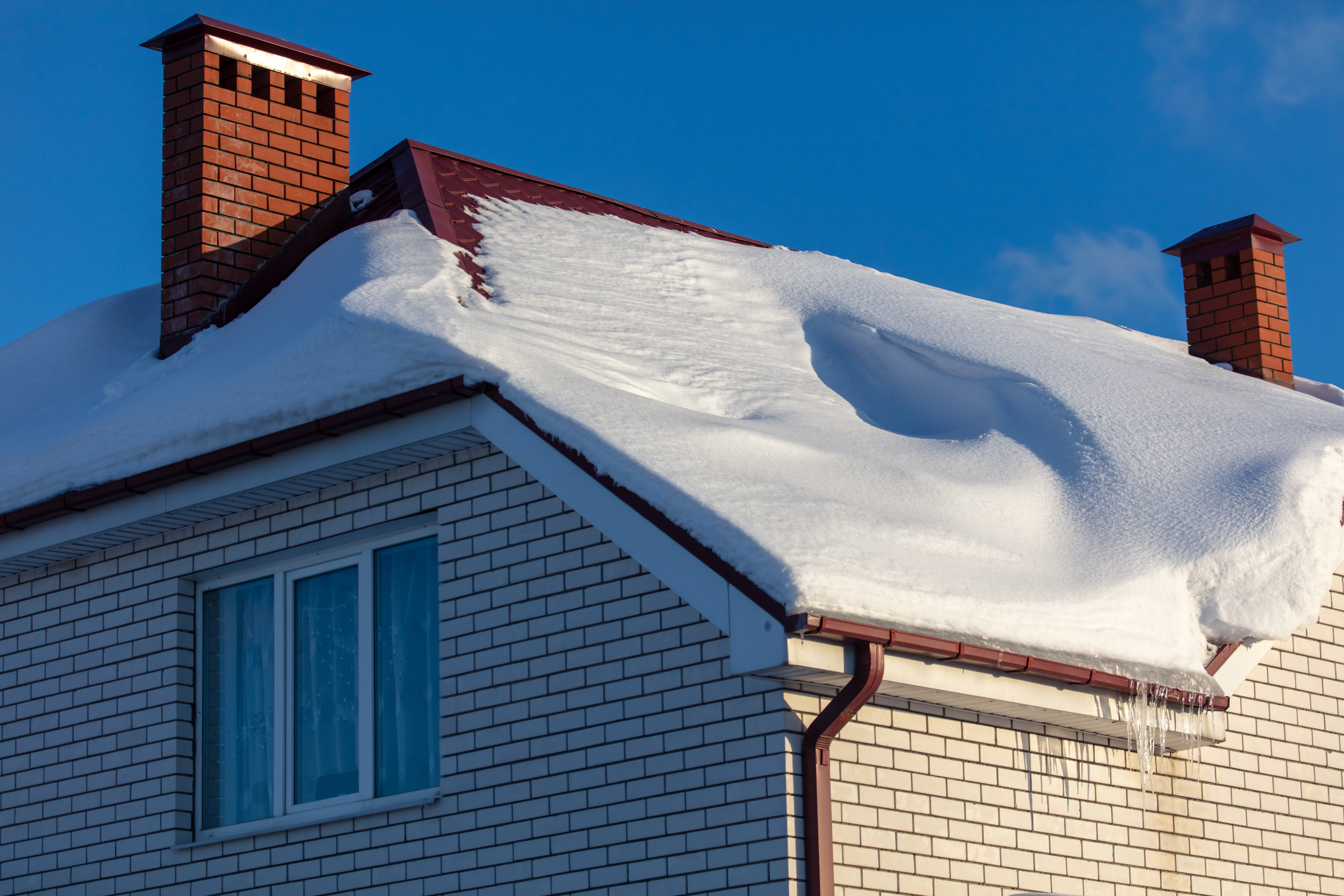
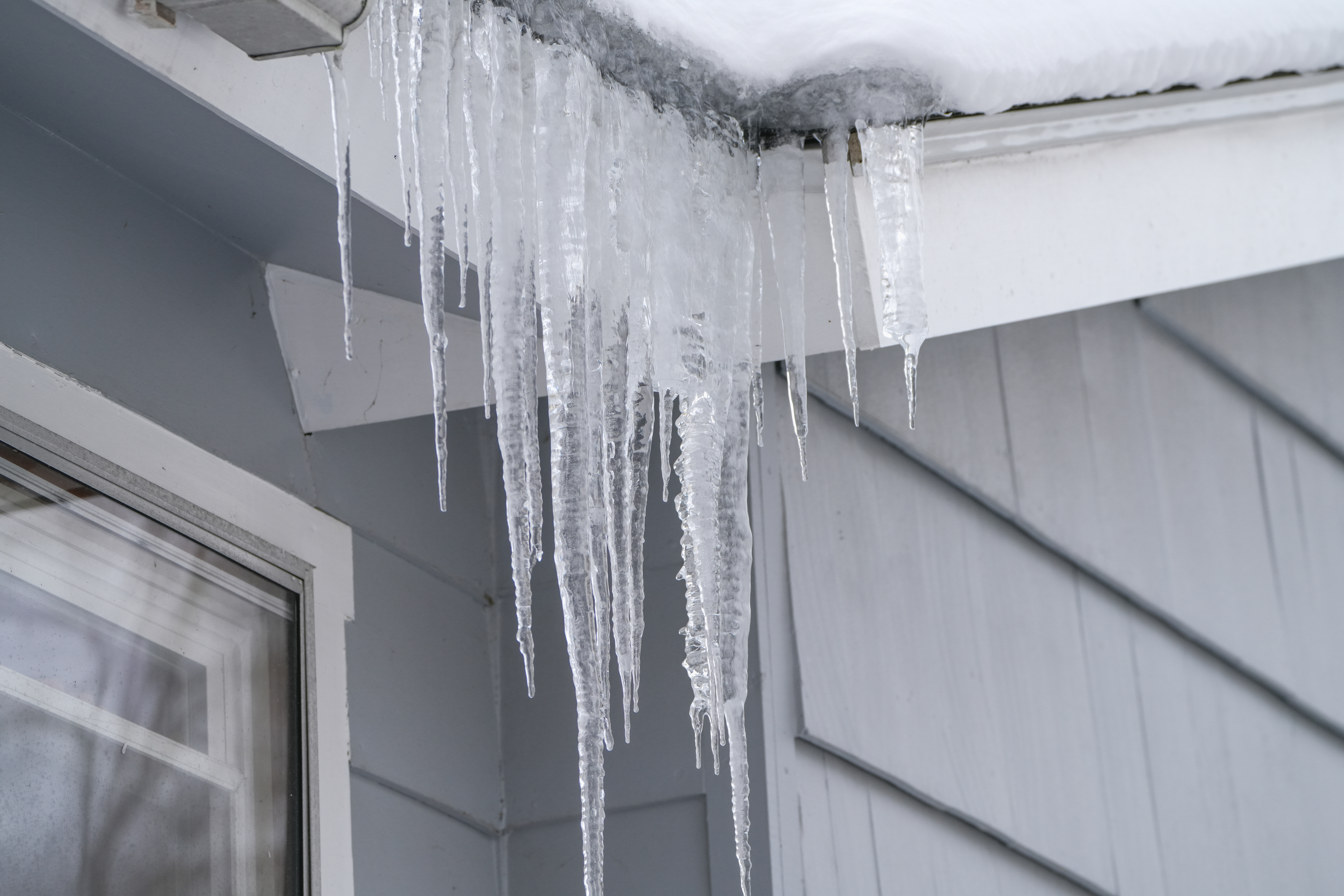
Winter in New England certainly is beautiful. Picturesque snowfalls turn even the most ordinary suburban streets into magical places. However, those pretty snow-covered roofs come with a serious problem: ice dams. If you’re a homeowner looking to protect your property from the hazards of winter weather, understanding how ice dams form and how to prevent them is essential. Our team of NH roofers at Derek Cook’s Roofing Specialists is here to break down everything you need to know.
No one understands the dangers of ice dams quite like NH roofers. Here’s an overview of how they form and how to prevent them.
What Are Ice Dams?
First, let’s clarify what we’re talking about. Ice dams are thick ridges of ice that form along the edge of a roof, typically at the eaves. These ridges prevent melting snow from properly draining off the roof. Instead, water backs up behind the ice and can seep under the shingles, potentially entering your home.
How Do Ice Dams Form?
So, how does snow on your roof turn into ice at the eaves? Ice dams develop when heat escapes from your attic and warms the roof surface. This heat melts the snow on the upper portions of the roof. As the water flows down, it reaches the colder edges of the roof where temperatures are below freezing. There, it refreezes and gradually forms a solid ice barrier.
Here are some common factors that lead to ice dams:
- Poor attic insulation
- Inadequate roof ventilation
- Warm indoor air leaks
- Heavy snowfall followed by freezing temperatures
What Damage Can Ice Dams Cause?
Ice dams may look harmless, but they can cause significant and expensive damage, including:
- Roof leaks that lead to stained ceilings or damaged drywall
- Rotting roof decking
- Mold growth due to moisture buildup
- Damaged gutters from the weight of the ice
- Insulation deterioration, causing a reduction in energy efficiency
Over time, these issues can compromise your roof’s structural integrity, necessitating costly repairs. That’s not something you want to deal with at any time of year, but especially not during the winter.
How to Prevent Ice Dams
While ice dams are common in the Northeast, there’s a lot you can do to prevent them. Our team of NH roofers recommends:
- Improving attic insulation to reduce heat escape
- Sealing air leaks around chimneys, vents, and light fixtures
- Ensuring proper attic ventilation so cold air can circulate
- Clearing snow from the roof with a roof rake after major storms
- Installing heat cables in problem areas
If you’re concerned about ice dams forming on your roof, we can perform a roof inspection to find potential problems.
Protect Your Home Year-Round with NH Roofers
Your roof protects your home, so keeping it in good condition is essential. Our team at Derek Cook’s Roofing Specialists is ready to help you tackle roofing issues and protect your home. Contact us today for more details about our services.